

Porcelain Crowns, Bridges, Inlays and Veneers
Excellent esthetics and strength
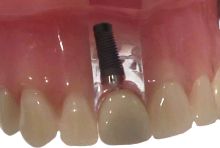
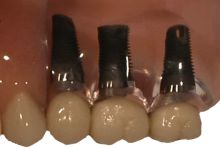
There was a revolution in "adhesive dentistry" in the 1980's that allowed us to bond porcelain directly to tooth structure for the first time. Prior to that time, we had to use gold "copings" hidden under porcelain to get enough strength to prevent porcelain fractures. One of the problems with gold was that it blocked light that enters teeth, so as gums recede next to a porcelain/gold crown, the root looks dark. All porcelain restorations allow light to pass through to the crown of the tooth and the root structure, so edges of crowns are less noticeable as gums recede. We can also place porcelain crowns and bridges over implant abutments.
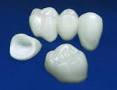
Porcelain Crowns are placed to strengthen teeth that have had large areas of decay, wear, cracks, or fracture. Crowns are sometimes placed for cosmetic reasons. Until recently, most crowns were made with porcelain facings that hid gold castings. A modified design still used gold for strength, but allowed porcelain to seal visible edges with no gold showing. We now have all ceramic crowns, where there is no gold to hide. The porcelain allows light to enter the tooth deeper, better matching translucence qualities of natural teeth. New ceramic materials provide greater strength that can take the stresses of chewing.
Porcelain Bridges are used to replace a missing tooth. Adjacent teeth are used as abutments, or anchors, and an artificial tooth fills the space from a missing tooth. We can often use all ceramic bridges, but there are still situations where we like the strength of gold, especially when the bridge spans several missing teeth. Alternatives to replace missing teeth include single tooth implants and removable partial dentures.
Porcelain Inlays are alternatives to silver fillings, composite fillings, and gold inlays. The advantages of porcelain inlays are optimum appearance, better strength than composite fillings, and better bonding to tooth structure than silver or gold. Disadvantages include cost and chair time to place.
Porcelain Veneers are a good alternative to porcelain crowns when less than a third of the tooth is broken away, and for many cosmetic reasons. A veneer is more conservative than a crown, because less tooth structure is removed. Veneers look great, because we can control translucence and opacity to match adjacent teeth, and because we do not have to hide any metal in the restoration. There was a revolution in "adhesive dentistry" in the 1980's that allowed us to bond porcelain directly to tooth structure for the first time. Since then, we have found that veneers can last as long as crowns.
 by Keith Collins, DMD